Seventy Years of Xiangqi Champions, Annotated
Ask a chess player to name the greatest and you get an argument with a shape to it: Fischer, Kasparov, Carlsen, measured against a title that has passed hand to hand since 1886. Ask the same about xiangqi and most English answers stop at the question.
There is an answer, and almost nobody disputes it. Hu Ronghua won fourteen Chinese national championships, took the first at fifteen and the last at fifty-five, and won or shared every one of the ten held between 1960 and 1979.
So I built the record out. Every champion of both xiangqi titles, an engine-annotated game for most of them, free and playable move by move.
- Every national champion, 1956 to 2025: 22 winners, 57 championships
- Every world champion, 1990 to 2025: 11 winners, 19 championships
- Two studies you can walk branch by branch: national, world
- All of it in English, simplified Chinese and traditional Chinese
The recent record carries an asterisk
Ten of the thirteen men who have won the national championship since 2005 have a published ruling against them, including every winner from 2010 to 2023. Between 2024 and 2026 the Chinese Xiangqi Association sanctioned 49 people over buying and selling games, and a court in Hangzhou convicted six grandmasters of bribery. I kept every name in the tables with the finding beside it, because a list that quietly dropped them would be a worse account of what happened.
It is a bigger story than a column in a table, and almost none of it has been written up in English. The full account is here: the investigation, everyone sanctioned, the reasoning, and the Chinese sources it all comes from.
The pipeline behind it
I built an analysis pipeline for xiangqi games, and it is what produced every annotation on these pages. Feed it a game and it returns a finished study: every move judged, the engine’s preferred alternative hung as a branch you can play into, a verdict closing each branch, and a note in plain English saying what the move cost.
It runs in four stages.
Harvest and verify. Games come out of the public archives, and I replay every one through the rules engine before keeping it. A record that does not replay legally gets reported as broken rather than published. That matters more than it sounds: the archives contain transcription errors, and a game nobody checked is a game that will eventually show a reader an illegal move.
Analyse. Pikafish at a million nodes a position, once per ply, at MultiPV 2 so every position yields a best move and a runner-up. The runner-up is the expensive part and it earns its keep: without it you can say a move was bad, but you cannot say a move was the only one, so ! and !! are unmarkable. There is also a second search on the plies where a piece was offered, to find out whether the engine’s line takes it.
Judge. Win probability before and after each move decides whether it was an inaccuracy, a mistake or a blunder. A separate pass looks for the moves worth praising. The engine’s own line becomes a sibling branch on the move it should have replaced.
Score. Each branch closes with an assessment symbol in the notation chess players already read: ± a clear advantage, ⩲ a slight one, = level.
None of it is specific to these 25 games. It is the same machinery that powers the alternative lines and annotations everywhere else on Mistboard, and pointing it at a new game costs me an afternoon of engine time rather than a month of annotating by hand.
The numbers
| games annotated | 25 |
| mainline moves | 3,081 |
| moves judged worth marking | 201 |
| engine sidelines | 183 |
| moves inside those sidelines | 4,228 |
| positions in the published trees | 7,309 |
| study chapters, both lists | 25 |
Of the 201 judged moves, 108 are inaccuracies, 82 are mistakes or blunders, and 11 are moves the engine wanted to praise. Three of those are marked brilliant.
Assembling the record
The larger job was the data rather than the engine. I could not find one English list to check against, so I assembled it from Chinese sources and cross-checked: 22 national champions across 57 championships, 11 world champions across 19, with title counts, every year won, and the shared title in 1962 marked as shared.
Both charts render from that same data, so the picture and the table cannot disagree with each other.
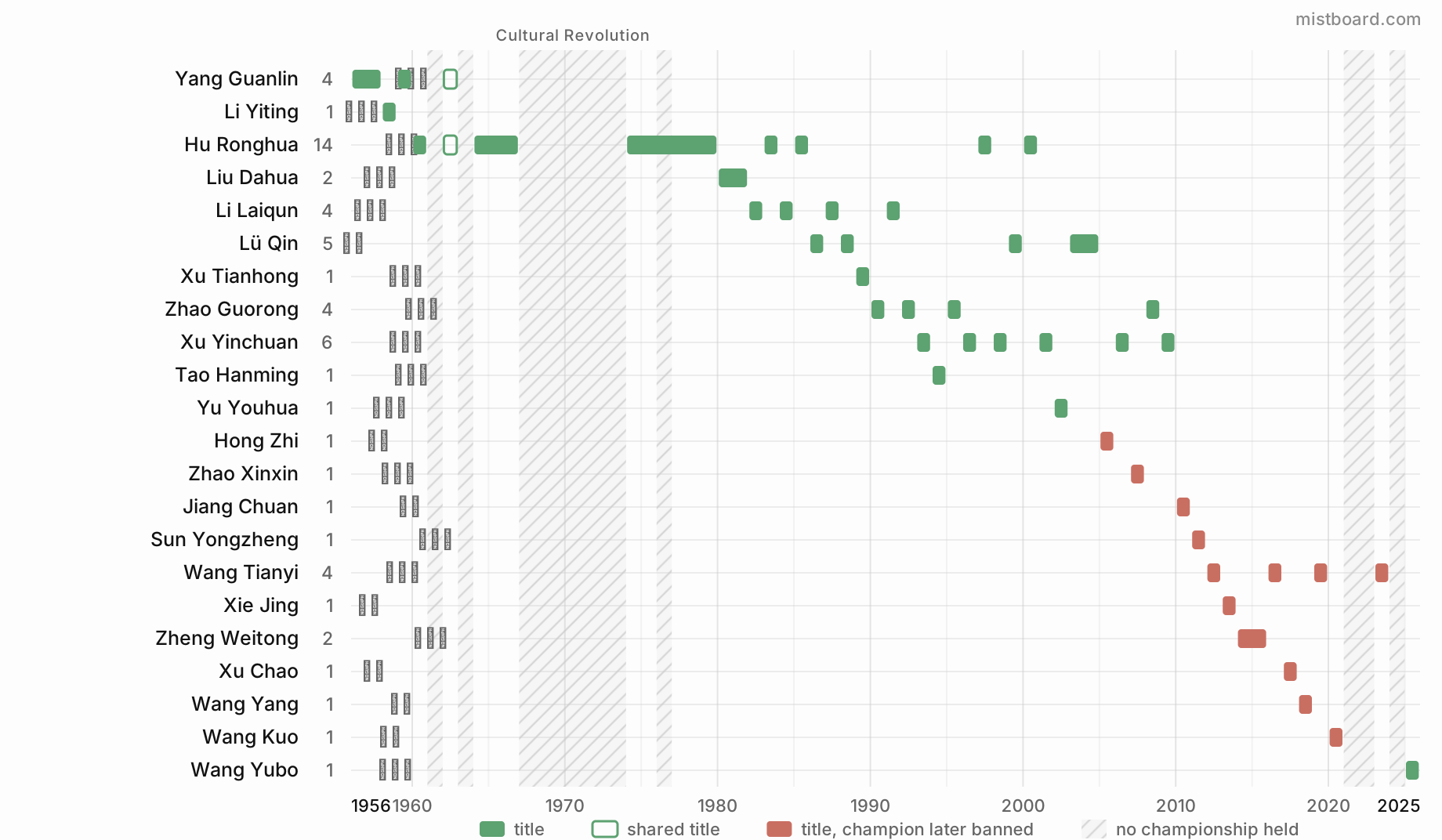 Hu Ronghua holds the middle for forty years. The gap in his run is the Cultural Revolution rather than a rival. From 2005 the bars turn red.
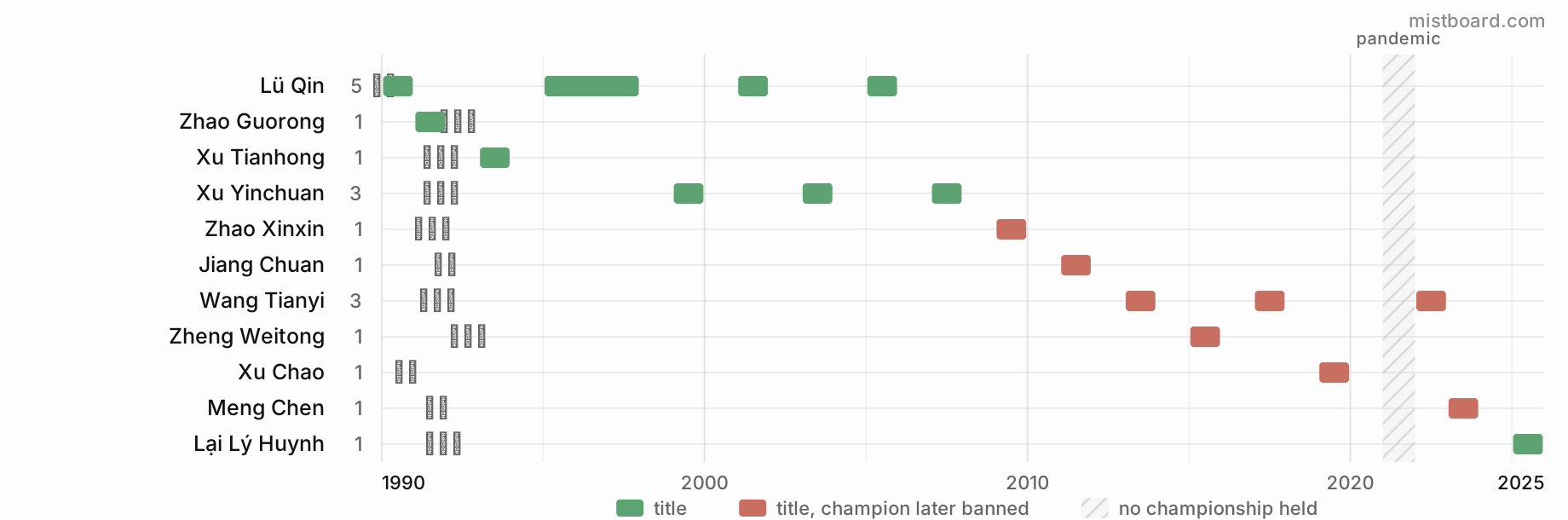 A third as much history, and the same shape at the end.
Play it
If you play chess you can read a xiangqi board in about ten minutes, and the annotations use notation you already know.
The learn page takes about five minutes. The studies carry the engine’s lines as branches you can play into.
Below is the 1965 final: ninety moves of endgame between the first champion and the man who had taken the title off him five years earlier.